
AI Moto Graphics: Expectation vs Reality
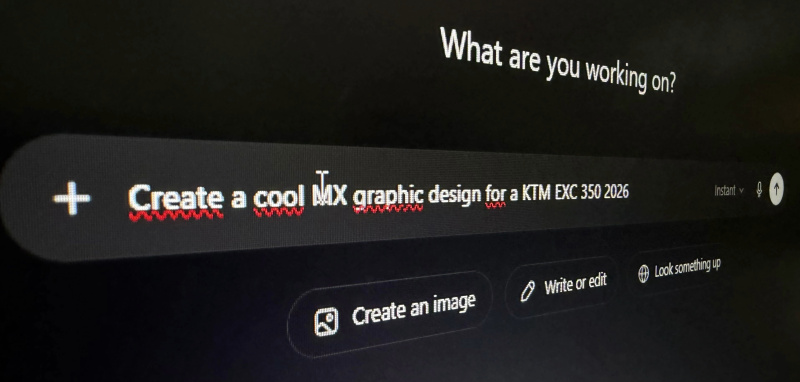
AI generated moto bike graphic designs are becoming more common than ever.
Almost daily, riders are sending us AI generated concepts, mockups, and design ideas for their bikes. And honestly, we understand why. Some of them look incredible at first glance.
AI can be fast, creative, and capable of generating aggressive layouts, unique colour combinations, futuristic textures, and endless concepts within seconds. For riders trying to visualise an idea or explain a direction, it can be a genuinely useful tool.
But there is also a growing gap between what AI creates and what works in the real world of motocross graphics production.
One of the biggest things AI does not understand is the shape and flow of real motorcycle plastics. Many AI generated concepts are built on unrealistic body shapes, generic bikes, or fictional templates rather than the actual curves, edges, airboxes, shrouds, and number plates found on a real motocross bike.
A motocross graphics kit is not simply an image placed onto plastics. The design needs to flow naturally across multiple separate panels while still looking balanced, aggressive, and clean once fitted to the bike.
This is often where AI generated designs begin to run into problems. A concept may look impressive in a render, but once adapted to real templates, issues quickly appear. Lines stop matching correctly, shapes become distorted, and certain details disappear entirely once wrapped around complex plastic parts.
Customer AI Generated Concepts
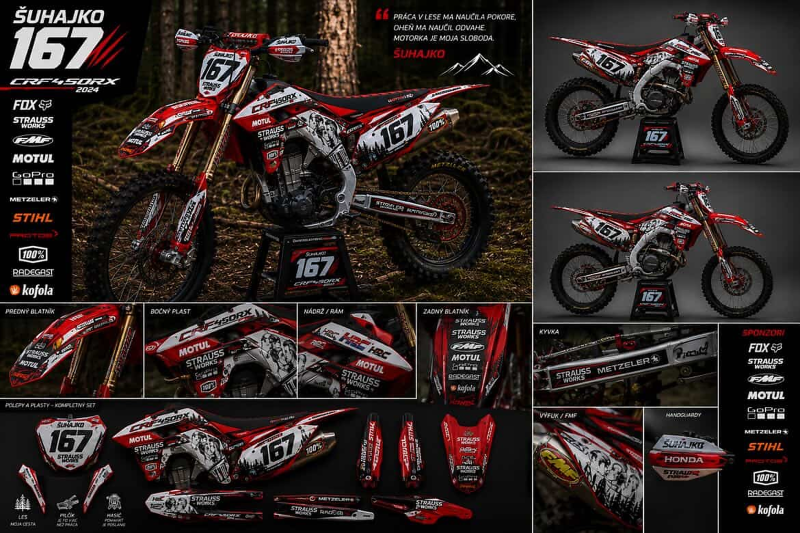
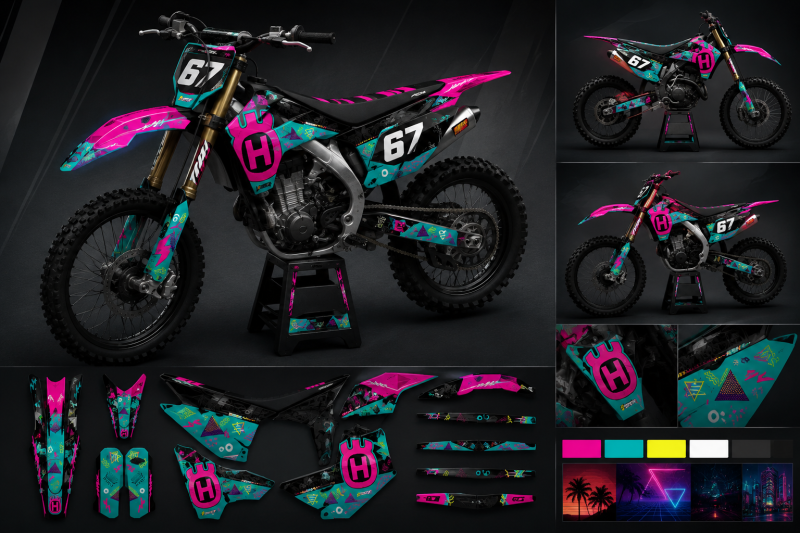
AI generated concepts can create visually impressive ideas very quickly, but they are often built without real production templates, proper panel flow, or real world material limitations in mind.
SCRUB Designz Adaptations
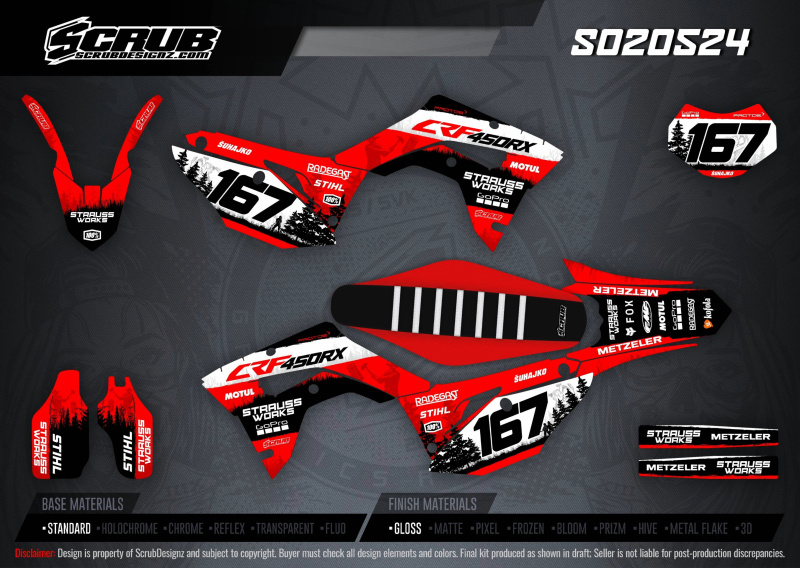
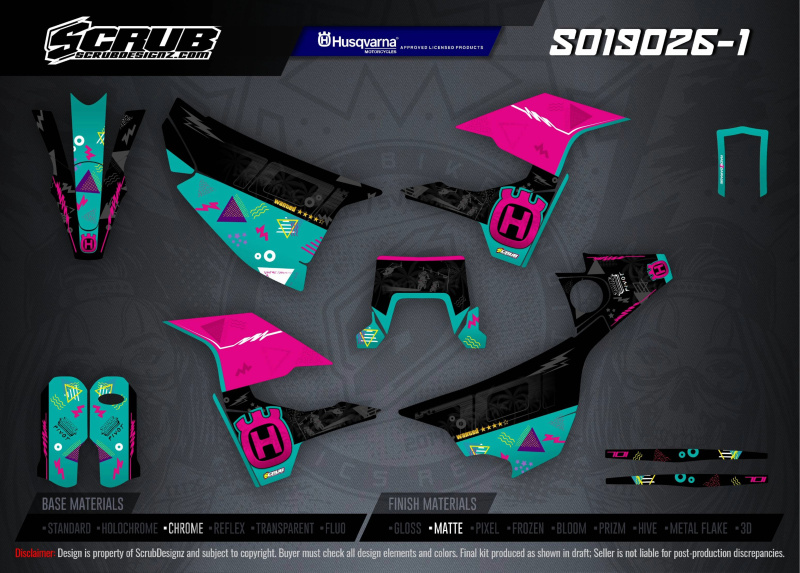
Our designers adapted the original concepts into production ready designs built to work on real bike plastics.
We asked one of our most experienced designers, Andrej, what it is like working with AI generated designs from customers.
“AI does not understand real templates or how graphics need to flow across different plastics. A lot of the time we need to redraw sections completely because certain shapes or details simply do not work once you adapt them to a real bike.”
“Customers also sometimes expect the final result to look identical to the AI render, but colours, reflections, chrome effects, lighting, and material combinations can all behave differently once printed in real life.”
“At the end of the day, AI concepts are best used as inspiration. They can help communicate an idea quickly, but experienced designers still need to rebuild, adapt, simplify, and balance everything properly before it becomes a real graphics kit.”
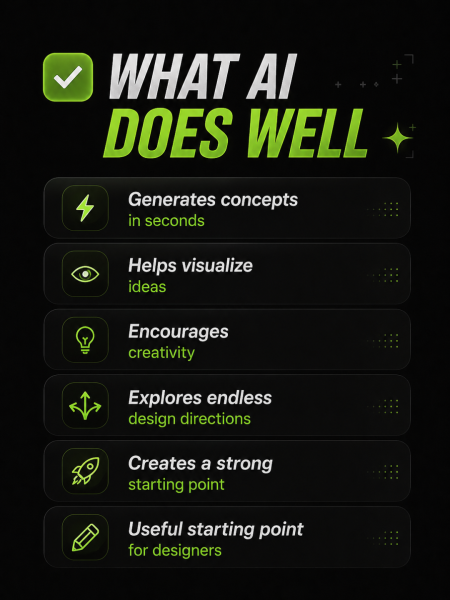
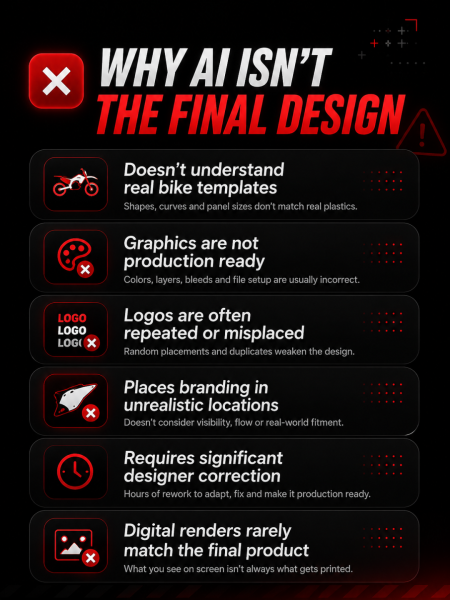
Logo placement is another common issue. AI regularly repeats logos excessively, distorts branding, creates fake sponsor marks, or places elements in positions that simply do not work visually on the finished bike.
That does not mean AI is a bad tool. Far from it.
Used properly, AI can help riders communicate ideas faster, explore themes and colour directions, and speed up the early creative process. As a source of inspiration, it can be extremely useful.
But there is still a major difference between generating an idea and creating a motocross graphics kit that truly works on a real bike.
That final result still comes down to experience. Understanding visual flow, plastics, production, balance, and knowing when to simplify certain details or push others further to improve the overall look of the bike.
Because at the end of the day, the goal is not just to create something that looks good as an AI image on a screen.
The goal is to create something that looks incredible fitted to a real bike in the real world.
AI can help share your vision. Our experienced designers will bring it to life.